Case study
Hertz MiniLease
As part of a two-person design team, I helped design Hertz MiniLease for private and business customers in Switzerland. The platform connected vehicle search, comparison and enquiry in a responsive experience backed by CMS-managed inventory.
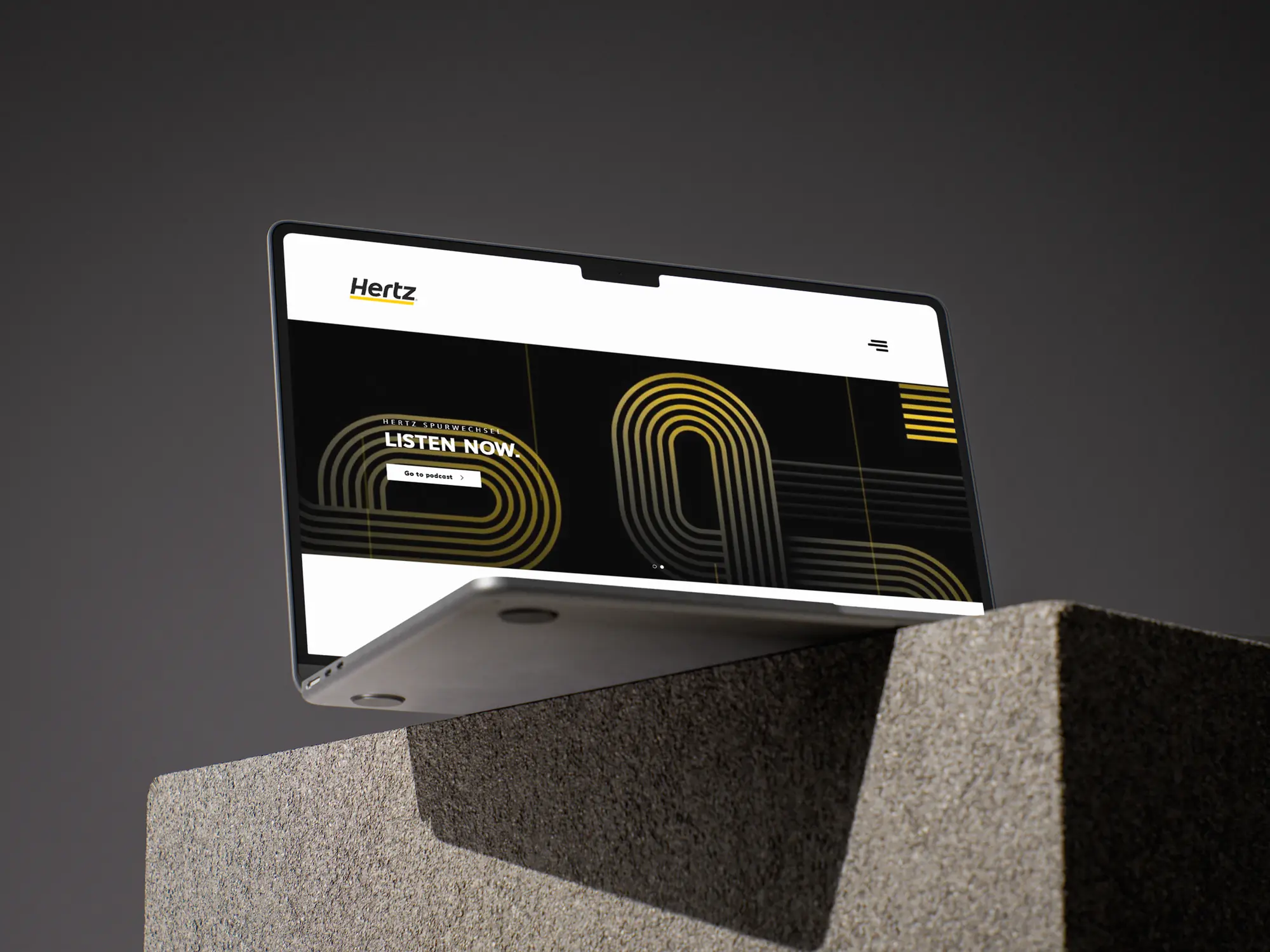
Hertz MiniLease across desktop, tablet and mobile.
Context and my role
An online MiniLease experience for two very different customer types.
Hertz Switzerland needed an online experience for its MiniLease offer. Private and business customers had to be able to explore vehicles, compare options and send an enquiry with relevant details.
The two audiences had different needs, but both relied on the same underlying inventory. We needed to make each route relevant while keeping the experience coherent. Vehicle information also had to remain usable as the Hertz team updated it through the CMS.
My role: information architecture, flows and responsive interface design.
My work covered information architecture, user flows, wireframes and responsive interface design. I worked closely with the other designer on the private and business journeys.
We reviewed structure and flows with Hertz stakeholders and collaborated with developers on how CMS-managed vehicle information appeared in the interface.
Approach
Map the two customer journeys. We defined routes for private and business customers, from selecting a category to submitting an enquiry.
Structure the vehicle information. We organised the data needed for listings, filters and comparison, aligning the interface with the CMS.
Develop the screens. I worked on wireframes and responsive layouts, followed by the visual interface as the flows were agreed.
Support implementation. We collaborated with developers to check how the designs worked with changing vehicle inventory.
Key design decisions
Give each audience a relevant starting point
Separate entry points helped private and business customers reach the appropriate vehicles and information. Both routes followed the same underlying browsing and enquiry logic.
Use the same structure for vehicle details
Shared fields and presentation rules made vehicles easier to compare. Aligning these rules with the CMS also helped keep listings consistent when inventory changed.
Make enquiries useful to the sales team
The enquiry flow captured the selected vehicle and relevant duration or package details. This gave the Hertz team context for its response and connected the customer's browsing choices with the next step in the sales process.
The solution
One coherent journey — from browsing vehicles to a structured sales enquiry.
Customers could choose a category, browse and filter vehicles, compare options and submit an enquiry. Responsive layouts supported the journey across desktop, tablet and mobile.
Behind the interface, the CMS supplied the vehicle information. This connected the customer-facing experience with the Hertz team's ongoing inventory management.
Private and business customer journeys from browsing to enquiry.
Vehicle listings, filters and comparison views.
The enquiry flow with selected vehicle and package information.
Selected screens from the launched product.
Outcome
Hertz MiniLease launched as an online product for private and business customers. It covered the journey from browsing vehicles to sending a structured sales enquiry, with CMS-managed inventory supporting routine updates after launch.
What I learned
A customer journey is only as strong as the information structure behind it.
The project showed how closely a customer journey depends on the information behind it. Agreeing the vehicle structure early helped connect browsing, comparison and sales enquiries. Working with another designer, developers and Hertz stakeholders also kept decisions grounded in both customer needs and delivery requirements.